
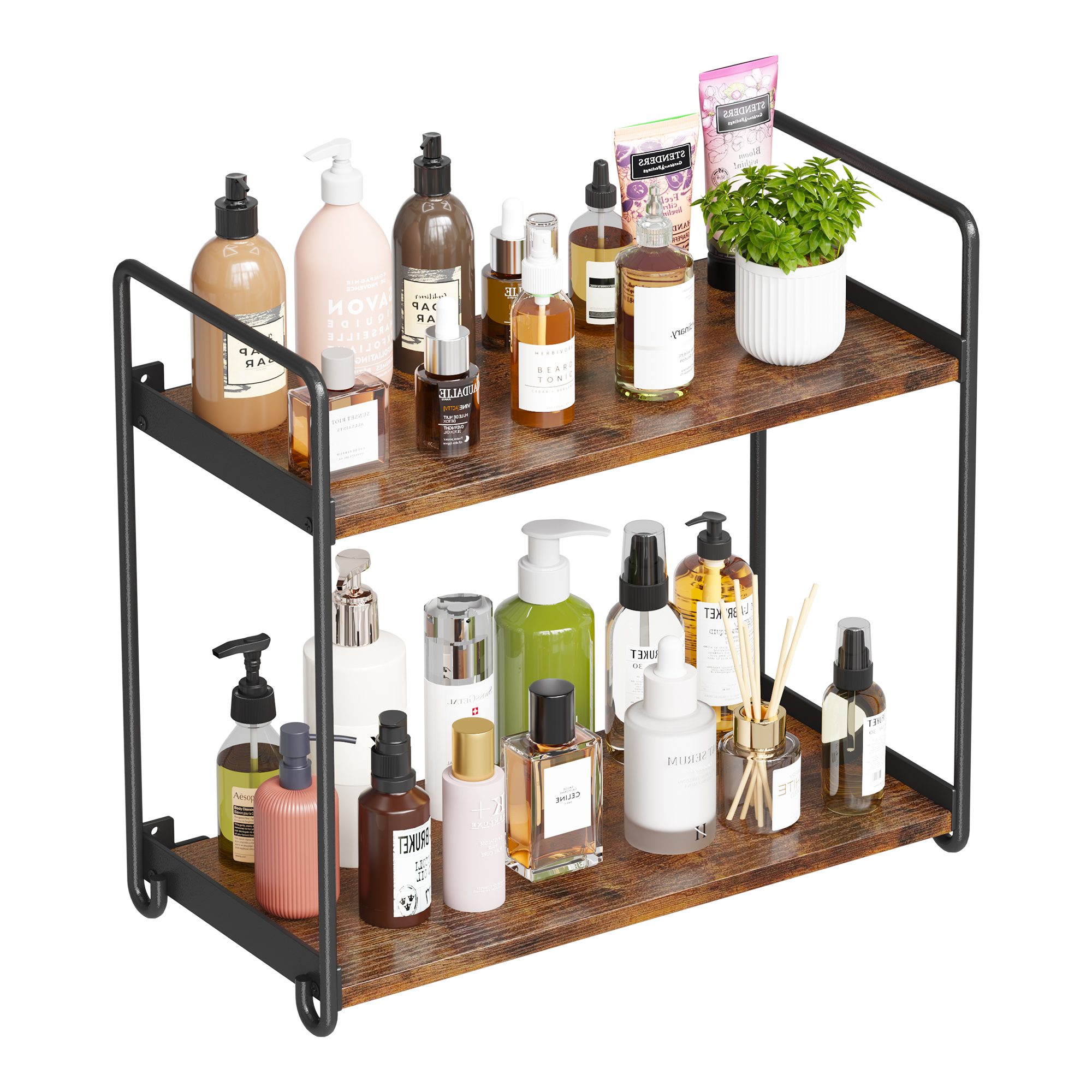
These shelves of bathroom organization are unique in their category: they are always wet, they have different temperature, there are remains of soap and splashes of water. The improper material results in rusts, swellings, moulds and re-occurrences of the materials. In Shenzhen Deshunyi Household Products Co., Ltd. which has more than 1,800 employees, a 120,000 m² facility in Huizhou, and a new 100,000 square meters plant in Vietnam, we manufacture long-lasting, layered carbon steel racks, hanging shoe organizers, and bathroom storage solutions. A comparison of the direct material is given below to allow you to make sourcing decisions.
1. Comparisons between Carbon Steel and Stainless Steel: Strength vs. Corrosion Resistance.
Carbon Steel (Powder-Coated)
Advantages: Good (tensile to 500 Mpa) and high load bearing (100 and above kg/shelf) and can be easily shaped to complex forms and are not that expensive to purchase in large quantities.
Disadvantages: Can easily be rusted when there is coating that is scratched. Requires multi-layer protection.
Ideal application: Low cost lines, dry or airy bathrooms, low humidity markets (e.g. inland North America).
Deshunyi standard: 1.5-2.0mm thick, zinc-phosphated ,with electrostatic powder coating (80-100 microns,200+ hours salt spray).
Stainless Steel (304 or 430)
Advantages: It is naturally resistant to rust (chromium oxide coating), will not have any coating to scratch off, and can be washed easily, and is food grade.
Cons: Tensile is lower than carbon steel (480-620 Mpa in 304) and thus the material is softer and can be easily scratched and is 2-3 times more costly.
Best application: High end lines, coastal, professional or business baths.
Recommendation: Wet zone (in showers, over sinks) to be used with 304. Dry storage Use 430 (magnetic, a little less resistant to corrosion).
Victor in life expectancy: Stainless steel 304, although carbon steel with the best coating will provide the best price to most of the wholesale markets.
2. Aluminum vs. Coated Steel: Light vs. Heavy: Lightweight Convenience vs. Heavy-Duty Reliability.
Aluminum (Powder-coated or Anodized)
Advantages: No rust, extremely light (1/3 the weight of steel), can be drilled and cut easily and is intrinsically non-magnetic.
Disadvantages: Tensile strength is weak (90-150 Mpa), bends with heavy load (maximum weight of 25-30 kg per shelf) and costly in comparison with carbon steel as well as easily scratched.
Best: Small shelves that are mounted with adhesives, tension pole caddies, small racks that can be easily moved.
Precautions: Do not use on racks of more than toilets with heavy bottles of shampoo or gigantic towels.
Coated Carbon Steel
Pros: Are able to hold 100 or more kg simultaneously on a shelf, can be bent or warped, can be stable at high temperatures (hair dryers, curling irons).
Disadvantages: Greater weight (shipping cost difference) is needed, coating integrity is necessary.
Ideal applications: Free standing shelves, over toilet shelve units, corner heavy-duty racks.
Champion in load bearing: Coated carbon steel. Aluminum can only be used in making very small or light-duty shelves which are mounted on the wall.
3. Plastic, Bamboo & Glass: Trade-Offs that are Niche and Serious.
Polypropylene or ABS Plastic.
Pros: Totally waterproof, inexpensive, light and comes in numerous colours.
Cons: Low weight (10-15 kg), will be brittle with use (UV and heat decays), the appearance of the material is cheap.
Ruling: It is okay with short run or extremely low-end retail products (dollar stores), but not long-term products at wholesale.
Bamboo (including waterproof sealant)
Advantages: environmentally friendly, warm design, eco-friendly.
Limitations: Not air tight, swells and cracks in high moisture, sealant may also wear out in 6 -12 months, cracks in high moisture, molds in cracks.
Conclusion: Should not be used in bathrooms. Suitable to the living rooms or dry closets.
Tempered Glass
Pros: It is not dirty, it appears elegant and it cannot be stained.
Disadvantages: Bulky, collapses when struck, needs steel frames to support, has a capacity of 10-15 kg per shelf.
Conclusion: Can be used as shelf inserts on steel frames, but not as alone.
4. Coating and Surface Treatment: The Lifespan Determinant not So Obvious.
Even the finest steel cannot do without being coated. Compare these treatments:
|
Treatment |
Rust Protection |
Durability |
Cost |
Best Use Case |
|
Electrostatic powder coating |
200–500+ hours salt spray |
Excellent (chip-resistant) |
Medium |
Normal to carbon steel racks |
|
Zinc-aluminum alloy (Galvalume) |
500–1,000 hours |
Very high (self-healing scratches) |
High |
Coastal markets or highly humid markets. |
|
Epoxy coating |
300–600 hours |
Good with time yellows |
Medium |
Racks in the indoor bathrooms. |
Our electrostatic powder coating is applied in Deshunyi in three stages but preceded by the pre-treatment of degreasing, phosphating (zinc or iron) and the coating. In the case of Vietnam-made racks, which are to be used in Southeast Asia we change to zinc-aluminum alloy coating (500+ hours salt spray). Invariably, order salt spray test report (ASTM B117) and cross hatch adhesion test results (ISO 2409).
Summary: Matching Material to Market
Budget / Dry climates → Powder-coated carbon steel (200 or more hours salt spray)
Bathrooms that are wet or coastal areas / wet areas → 304 Zinc-aluminum coated carbon steel or stainless steel.
Light-duty / small shelves- anodized aluminum.
Avoid: Plastic, uncoated metals and spray paint, bamboo.
As a well-known manufacturer with two plants in China and Vietnam, Deshunyi helps wholesale clients to select the right material to work with in each of the targeted markets- it might be storage of vinyl records up to shoe racks and bathroom organizers. Have no faith without testing. Request samples and authenticated test results.
Table of Contents
- 1. Comparisons between Carbon Steel and Stainless Steel: Strength vs. Corrosion Resistance.
- 2. Aluminum vs. Coated Steel: Light vs. Heavy: Lightweight Convenience vs. Heavy-Duty Reliability.
- 3. Plastic, Bamboo & Glass: Trade-Offs that are Niche and Serious.
- 4. Coating and Surface Treatment: The Lifespan Determinant not So Obvious.